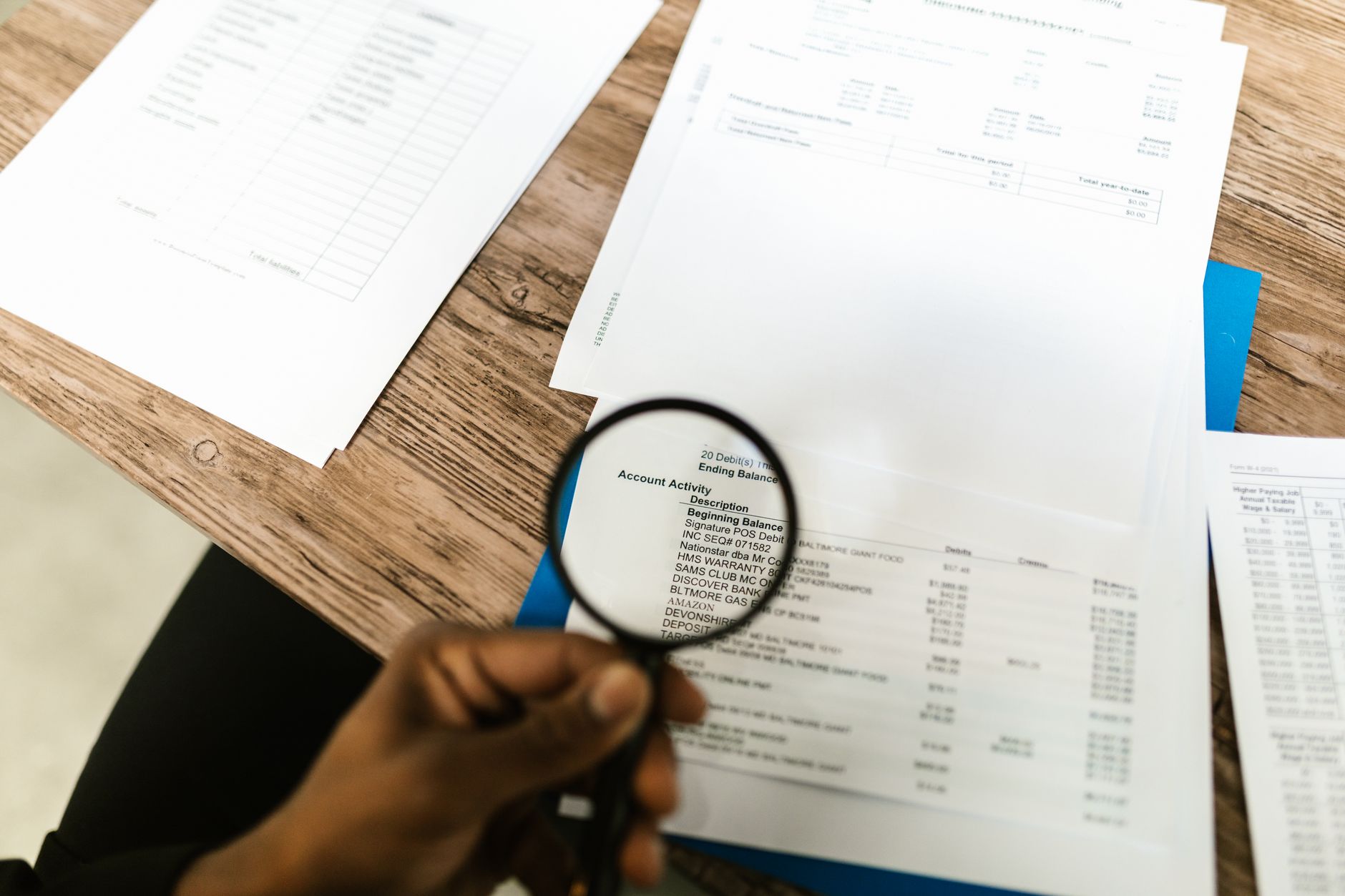
Before you pay anything for a property in Nigeria, check four things independently: that the property exists and matches the listing, that the person selling or letting it has the right to, that the title is genuine, and that your money is protected until you have what you paid for. None of these can be confirmed from a listing alone, on any website, including Smart Estate MLS.
The risk is real. In April 2025, the Economic and Financial Crimes Commission (EFCC) announced the arrest in Abuja of a suspected land vendor accused of selling plots that did not exist, with payments said to range from ₦3.5 million to ₦60 million; enquiries to the Federal Capital Development Authority found the marketed locations did not exist (Premium Times report). The EFCC warned the public to be wary of itinerant land marketers.
Listings appear on social media, classified sites and agent websites with no requirement that they describe a real property, a real price or a real agent. The buyer carries the burden of checking. Whether you are buying your first home in Lagos, investing in land in Port Harcourt or renting a flat in Abuja, these ten steps will help you avoid the most common listing scams.

Step 1: Find the Listing's Record
Start by establishing where the listing lives and who is responsible for it. On Smart Estate MLS, every listing has a code, for example SE-P01234. The code tells you:
- The listing is on the MLS, posted under a named agent's account
- Its details (location, price, type and, where the agent gave it, title type) are recorded in fixed fields
- The agent has to re-confirm regularly that it is still available; a listing that is not re-confirmed is deactivated
- Everyone can refer to the same record if a question or dispute arises
The code does not tell you the property is real, the price is fair or the title is good. Smart Estate MLS verifies agents, not listings: a listing's details stay as the agent entered them. Treat the code as a way to pin down which record you are talking about, not as proof of anything about the property.
How to look up a listing code
- Visit mls.smartestateio.com/properties
- Enter the code in the search bar
- Compare what appears (photos, price, location, agent) with what you were sent
- If the code returns nothing, the listing has been removed or deactivated, or the code is not genuine. Ask the agent why
If a listing you saw elsewhere has no MLS code, that does not make it fake. It means you are relying on the agent's word alone, so the remaining steps matter even more.
Step 2: Check the Agent
In Lagos, real estate practitioners register with LASRERA, the Lagos State Real Estate Regulatory Authority. Ask a Lagos agent for their LASRERA registration number and check it with LASRERA directly. Elsewhere, there is no single equivalent register in every state, so ask for the agent's business registration with the Corporate Affairs Commission (CAC), and if they say they are an estate surveyor and valuer, ask for their registration with ESVARBON, the Estate Surveyors and Valuers Registration Board of Nigeria. Membership of a professional body such as NIESV, or of a developers' association such as REDAN, is worth asking about too, but it is membership, not a licence to broker.
On Smart Estate MLS, an agent can be identity-verified: their national identity number (NIN) and CAC business registration are checked and the names matched. A verified agent's profile shows:
- A Verified badge
- Their LASRERA number, if they are a Lagos agent who holds one and has added it (LASRERA is Lagos-only and optional)
- Their listings on the MLS
- Reviews left by signed-in users
You can find an identity-verified agent in the agent directory. Identity verification tells you who you are dealing with. It does not tell you that a particular property is genuine, so carry on with the steps below.
If an agent will not share their credentials, or says a registration has been "in process" for a long time, treat that as a red flag. Legitimate agents are usually happy to show them.
Step 3: Cross-Check the Photos
Scam listings often use stolen photos. The property looks good because the images came from a real listing somewhere else.
How to check photos
- Run a reverse image search on the photos (for example, Google Lens on a phone)
- If the same photo appears on other listings with different prices, locations or agents, be suspicious
- Ask the agent for a live video call from the property, walking from the street to the front door and through the rooms. Pre-recorded clips can be borrowed; a live call is much harder to fake
On Smart Estate MLS, every listing needs at least five photos, the same photo cannot be repeated within a listing, and photos already attached to another listing on the platform cannot simply be reused for a new one. That makes casual photo recycling harder, but it cannot prove the photos show the property described. Only an inspection can.
Step 4: Inspect the Property in Person
Many buyers, especially in the diaspora, pay for property they have never seen. The reasons are understandable: you are in London or Houston, the photos look right, and you do not want to lose the deal. No amount of online checking replaces a visit. When you, or someone you trust, inspect:
- Confirm the property exists at the stated address
- Check that it matches the listing photos and description
- Talk to neighbours: ask who owns it, how long it has been on the market and whether anyone else is showing it
- Note the condition, and whether it is consistent with the asking price
- Check for occupants. If someone lives there, find out their relationship to the seller

If you cannot visit personally
Send someone you trust who is independent of the seller: your own lawyer, a registered surveyor, or a family member or friend. Ask for photos and a live video call from the site, and for a written note of what they found.
Step 5: Understand the Title Documents
The title tells you who owns the property and what kind of interest they hold. Under the Land Use Act, the Governor may issue a Certificate of Occupancy (section 9), and the holder of a statutory right of occupancy may not transfer it without the Governor's consent (section 22).
Common title documents in Nigeria
| Title Type | What it is | What to watch for |
|---|---|---|
| Certificate of Occupancy (C of O) | Issued by the state Governor under the Land Use Act as evidence of a right of occupancy | Confirm it at the state Land Registry; forged copies exist |
| Governor's Consent | The Governor's approval of a transfer of a right of occupancy, needed under section 22 of the Act | A sale without consent leaves the buyer exposed |
| Deed of Assignment | The agreement transferring the seller's interest to the buyer | Only as good as the seller's own title, and should be registered |
| Survey Plan | Shows the exact location and boundaries of the land | Have a surveyor check it is genuine and not on acquired land |
| Excision / Gazette | Government releases part of acquired land to the original community, published in the official gazette | Check the plot actually falls within the excised area |
| Family receipt | An acknowledgement of payment from a land-owning family | Weak on its own; check the family's own title and who can sign for it |
On Smart Estate MLS, a listing can record its title type, so you can see what the agent says sits behind the property. That is the agent's statement, not a check. A property's title is only checked on Smart Estate MLS through a TitleSecure order on that property. TitleSecure is available for property in Lagos State and Ogun State only, and not on rentals. Basic (₦20,000) is a title check on land, without a Certified True Copy (CTC), with results in 24 hours. Advanced (₦50,000) is a full property check with a Certified True Copy of the title document and a written legal opinion, in 3 to 5 days. A listing shows the TitleSecure badge only after a completed check, and a report does not guarantee title or replace a solicitor. For property in any other state, TitleSecure is not yet available: use the searches in Step 6, a solicitor and a registered surveyor. See how title verification works in Nigeria.
Step 6: Search the Land Registry
Do not rely only on documents the seller gives you. Have your lawyer search the records at the state Land Registry: in Lagos, the Lagos State Land Registry at Alausa, Ikeja; in the FCT, a legal search through AGIS (Abuja Geographic Information Systems); elsewhere, the state's lands ministry or registry.
The FCT process is published. The AGIS legal search page sets the fee at ₦10,000 for a private or individual file and ₦20,000 for a commercial or organisational file, requires the original title document to be presented for sighting with valid ID, and says the result is usually ready within 24 hours and at most three days. Other states set their own process and fees, so ask the registry or your lawyer.
A search should tell you:
- Who the registered holder is
- Whether there are encumbrances, such as a registered mortgage or a court order
- Whether the property has been transferred before, and to whom
- Whether the title document you were shown matches the registry's record
Step 7: Watch for These Red Flags
These warning signs come up again and again in property fraud:
- A price far below similar properties nearby: if a house is offered for a fraction of what comparable houses in the same area are asking, ask why before you get excited
- Urgency pressure: "Another buyer is paying tomorrow." Genuine sellers understand that checks take time
- Cash-only demands: insisting on cash rather than a bank transfer leaves no paper trail
- No physical office: the agent works only through WhatsApp and a personal phone number
- Reluctance to show documents: "I'll bring the C of O to the lawyer's office", but it never arrives
- Several agents, several prices: if one property is advertised by many agents at different prices, some of them may have no authority to market it
- No business identity: a large transaction conducted entirely through a personal email account with no registered business behind it
- Mismatched details: for example, the survey plan shows one plot size and the agent quotes another, or the title names one area and the property is in another
- Refusal to meet at the property: the agent wants to "discuss terms" anywhere but the site
- No receipt or written agreement: every payment, even an inspection fee, should come with a written receipt
Step 8: Use Your Own Property Lawyer
For any purchase, use an independent property lawyer: not the seller's lawyer, and not one the agent recommends. Agree the scope and fee in writing at the start.
A good property lawyer will:
- Conduct the Land Registry search independently
- Review all the transaction documents
- Draft or review the deed of assignment
- Make sure the price and payments are properly documented
- Handle the Governor's Consent application where one is needed
- Advise on how to hold your money until the conditions of the sale are met
Step 9: Protect the Payment
Never pay into a seller's or agent's personal account on trust. Pay in stages that match what you receive, with the funds held by your lawyer or a licensed escrow service until each condition is met:
- Initial deposit: held, and released only after the title search and checks are complete
- Balance: released only when the documents are signed and handed over
- Final release: after you have taken possession
If a seller insists on full payment before any documents change hands, walk away.
Step 10: Use Smart Estate MLS for What It Does
Smart Estate MLS can help with parts of this process, as long as you are clear about what it does and does not do:
- One record per property: a property is listed once, with one code, and other agents market that same record rather than re-posting it with their own price
- Agent identity verification: an agent can be verified against their NIN and CAC registration, and a Lagos agent may show a LASRERA number
- Declared mandate: the listing agent has to declare their authority to market the property, and a disputed mandate goes through a claims review
- Mediated enquiries: you contact the agent through the platform, so there is a record of the enquiry
- TitleSecure: a title check you can order on a specific property in Lagos State or Ogun State
- Neighbourhood pages: neighbourhood guides for many areas, to understand a place before you visit
It does not verify listings, inspect properties or hold your money. If something about a listing looks wrong, tell Smart Estate through the contact page. If you have lost money to a fraud, report it to the police; online fraud can be reported through the Nigeria Police Force National Cybercrime Centre e-reporting portal.

The Checklist
Before you pay a single naira for any property in Nigeria, confirm all ten:
| # | Check | Status |
|---|---|---|
| 1 | Listing record found and matches what you were sent | ☐ |
| 2 | Agent's identity and registration confirmed | ☐ |
| 3 | Photos checked for reuse | ☐ |
| 4 | Property inspected in person, by you or someone independent | ☐ |
| 5 | Title documents seen and understood | ☐ |
| 6 | Land Registry search done | ☐ |
| 7 | No red flags left unexplained | ☐ |
| 8 | Your own property lawyer instructed | ☐ |
| 9 | Staged, protected payment agreed | ☐ |
| 10 | Seller's authority to sell confirmed in writing | ☐ |
If any item fails, stop until it is resolved.
For Diaspora Buyers
Buying from outside Nigeria adds risk: you cannot easily inspect, you may not have a local lawyer, and time differences make agents harder to reach. Adapt the steps:
- Prefer an identity-verified agent, and still confirm their registration yourself
- Send an independent person to inspect, chosen by you, not by the selling agent
- Instruct your own property lawyer, found independently of the agent
- Use live video calls for a first look, but never as a substitute for an in-person inspection by someone you trust
- Insist on staged, protected payment. No "I'll send you the documents after payment"
For more on buying from abroad, see the diaspora property investment guide.
Search properties on Smart Estate MLS →
Create a free Smart Estate MLS account →
Frequently Asked Questions
How do I check if a property listing is genuine in Nigeria?
Find the listing's record and confirm it matches what you were sent, confirm the agent's identity and registration (LASRERA in Lagos), reverse-search the photos, inspect the property in person or through someone independent, have your own lawyer search the title at the state Land Registry, and pay only in stages that are protected until each condition is met. No listing on any website proves a property is genuine on its own.
What does an MLS listing code tell me?
An MLS code (like SE-P01234) identifies one listing record on Smart Estate MLS, posted under a named agent's account and subject to regular re-confirmation. It lets everyone refer to the same record. It does not verify the property, its price or its title: Smart Estate MLS verifies agents, not listings.
How can diaspora Nigerians buy property more safely?
Prefer an identity-verified agent and confirm their registration yourself, send an independent person you choose to inspect, instruct your own property lawyer to search the title at the Land Registry, use live video calls only as a first look, and pay in protected stages rather than all at once.
What are common property scams in Nigeria?
Common scams include selling the same property to several buyers, forged title documents such as fake Certificates of Occupancy, impersonating the real owner, advertising properties that do not exist using stolen photos, selling plots in locations that do not exist, and pressuring buyers to pay before any checks can be done.
Can Smart Estate MLS check a property's title for me?
Only through TitleSecure, ordered on a specific property, and only for property in Lagos State and Ogun State (not rentals). Basic (₦20,000) is a title check on land without a Certified True Copy, in 24 hours; Advanced (₦50,000) is a full property check with a Certified True Copy and a written legal opinion, in 3 to 5 days. A report does not guarantee title or replace a solicitor. Elsewhere, use a Land Registry search, a solicitor and a registered surveyor.